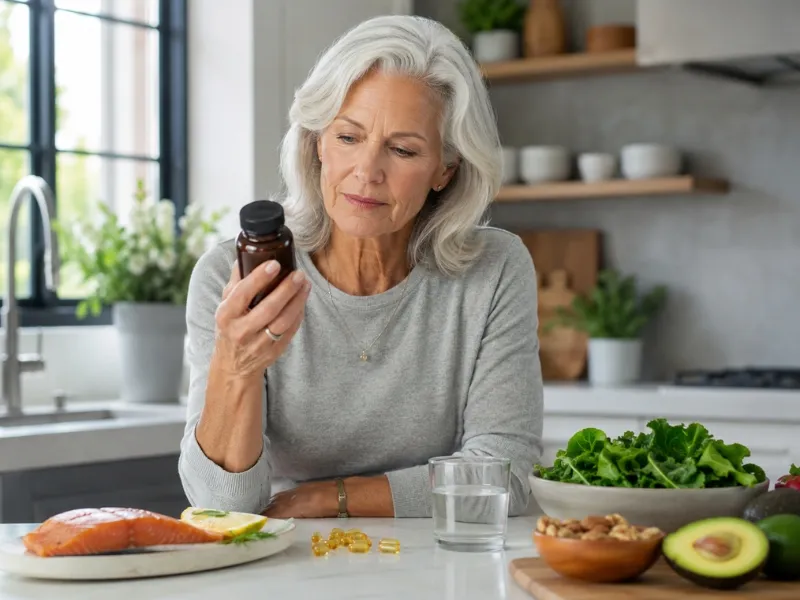
How Important Is Ubiquinol for Older Adults? Why This Form of CoQ10 Is Gaining More Attention
When it comes to maintaining health during aging, many people focus on:
Bones and joints
Muscle strength
Brain health
Heart health
Daily energy levels
However, there is another important factor behind the function of every cell:
Cellular Energy Production
This process is closely related to Mitochondria, often called the “powerhouse of the cell.”
One nutrient involved in this process is:
Coenzyme Q10 (CoQ10)
Especially the form known as:
Ubiquinol
which is a form that the body can use directly and has gained increasing attention among older adults.

What Is the Difference Between CoQ10 and Ubiquinol?
CoQ10 exists in two main forms in the body:
1. Ubiquinone
An oxidized form of CoQ10.
2. Ubiquinol
A reduced form of CoQ10.
It plays an important role as an antioxidant and is involved in cellular energy production.
When the body receives CoQ10 in either form, it can convert between these two forms.
However, as people age, the body’s ability to convert CoQ10 and maintain CoQ10 levels may decrease, which is why Ubiquinol has gained more attention.
Why Are Older Adults More Interested in Ubiquinol?
1. CoQ10 Levels Decrease With Age
CoQ10 is found in tissues that require high amounts of energy, such as:
Heart
Muscles
Brain
Liver
However, as people age, CoQ10 levels in the body tend to decline.
This may affect cellular energy production, especially in organs that require large amounts of energy.
Research from BioFactors, 2005 reported that CoQ10 levels in various tissues tend to decrease with age and are associated with aging processes.
2. Supports Cellular Energy Production
One of the main functions of CoQ10 is its role in mitochondrial energy production.
This process is called:
Electron Transport Chain
which helps produce energy in the form of ATP (Adenosine Triphosphate).
ATP is the energy source used by cells for:
Movement
Muscle function
Organ function
As people age, many may experience:
Feeling tired more easily
Slower recovery
Reduced ability to perform daily activities
Although these changes have many causes, supporting cellular energy production is one area that has gained attention.
3. Associated With Heart Health
The heart is an organ that requires a large amount of energy continuously.
Heart muscle cells contain many mitochondria to produce energy efficiently.
Therefore, CoQ10 has been widely studied in the area of:
Cardiovascular Health
Research suggests that CoQ10 is involved in:
Heart muscle function
Antioxidant status
Energy production in the heart
A study published in European Heart Journal, 2014 found that CoQ10 combined with Selenium supplementation in some groups of older adults was associated with improvements in certain cardiovascular health markers.
4. Helps Manage Oxidative Stress
As people age, the body’s ability to manage free radicals may decline.
This can lead to a condition called:
Oxidative Stress
which is associated with cellular aging.
Ubiquinol acts as:
A fat-soluble antioxidant
and may help protect cellular components, such as cell membranes, from oxidative damage.
Research from Free Radical Biology & Medicine, 2012 discussed the role of CoQ10 in protecting against oxidative damage and supporting mitochondrial function.
5. Supports Muscle Function and Recovery
Older adults need to focus not only on internal health but also on maintaining daily functional ability.
Muscles are important for:
Walking
Balance
Daily activities
Because muscles rely on mitochondrial energy production, CoQ10 has gained interest in areas such as:
Energy Metabolism
Muscle Function
Physical Performance
Especially among older adults who maintain an active lifestyle.
6. Ubiquinol and Statin Users
Statins are medications commonly used to manage cholesterol levels.
The mechanism of statins involves the same pathway related to CoQ10 production.
Therefore, researchers have studied whether statin use may affect CoQ10 levels in the body.
Some people taking statins may consider CoQ10 supplementation to support their CoQ10 levels.
However, supplementation should be discussed with a healthcare professional, especially for individuals with medical conditions or those taking multiple medications.
Research from Journal of the American College of Cardiology, 2018 discussed the relationship between CoQ10, statin-associated symptoms, and differences in research findings.
Who May Benefit From Ubiquinol?
Older Adults Interested in Healthy Aging
Because aging is associated with:
Lower CoQ10 levels
Changes in mitochondrial function
People Experiencing Lower Energy With Age
Examples:
Feeling tired more easily
Reduced activity levels
Slower recovery
People Who Exercise Regularly
Especially:
Active Aging individuals
Older adults who participate in sports
Those who want to maintain physical strength
When Should Ubiquinol Be Taken?
CoQ10 and Ubiquinol are fat-soluble compounds.
Therefore, they are generally recommended to be taken with meals containing fat to support absorption.
Examples:
Breakfast
Lunch
However, the appropriate amount depends on the product, individual health condition, and personal goals.

Summary
Ubiquinol is a form of CoQ10 that has gained increasing attention, especially among older adults, because it is involved in important biological processes, including:
✅ Cellular energy production
✅ Mitochondrial function
✅ Protection against Oxidative Stress
✅ Heart health support
✅ Maintaining an Active Aging lifestyle
However, Ubiquinol is not a substance that stops aging.
Instead, it is one of the nutrients that may help support the body’s functions as people age.
Because healthy aging is not only about living longer, but also about maintaining energy and the ability to enjoy a high-quality life.
References
Turunen M, et al. “Coenzyme Q metabolism in humans.” BioFactors, 2005
Littarru GP, Tiano L. “Bioenergetic and antioxidant properties of coenzyme Q10.” Prostaglandins, Leukotrienes and Essential Fatty Acids, 2010
Alehagen U, et al. “Cardiovascular mortality and Coenzyme Q10 and Selenium supplementation.” European Heart Journal, 2014
Crane FL. “Biochemical functions of coenzyme Q10.” Journal of the American College of Nutrition, 2001
Garrido-Maraver J, et al. “Clinical applications of coenzyme Q10.” Frontiers in Bioscience, 2014
Banach M, et al. “The role of CoQ10 in statin-associated muscle symptoms.” Journal of the American College of Cardiology, 2018

The Benefits of Calcium Citrate That Many People Still Don’t Know: Why Is This Form of Calcium Different?

Floods and Storms: 5 Vitamins to Keep at Home for Emergency Preparedness

What Happens When You Take Vitamin D3 Together with Magnesium?