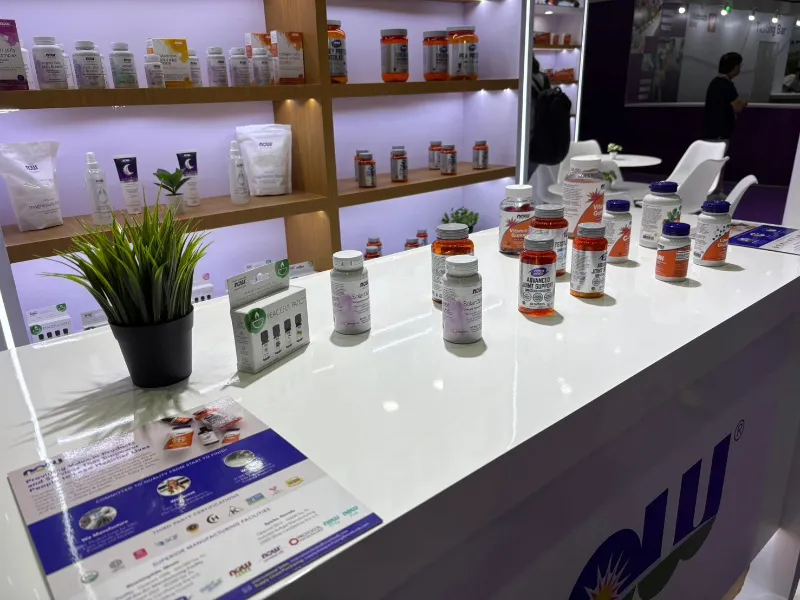
Supplement Quality Standards: The Key Factors Consumers Look For at Vitafoods Asia 2026
In the past, when choosing supplements, many consumers focused mainly on:
What vitamins or nutrients are included
The dosage amount
The price
Whether the brand is well-known
However, consumer behavior has changed significantly, especially among modern health-conscious consumers.
Today, people are asking deeper questions such as:
- “Where do the ingredients come from?”
- “Is there scientific research supporting it?”
- “How is it manufactured?”
- “How can I know that the active ingredients match what is stated on the label?”
This is why:
Quality + Safety + Transparency
have become key pillars of the modern supplement industry.
These topics are also receiving increasing attention at major industry events such as Vitafoods Asia 2026, which brings together ingredient suppliers, formula developers, supplement manufacturers, and Nutraceutical experts from around the world.
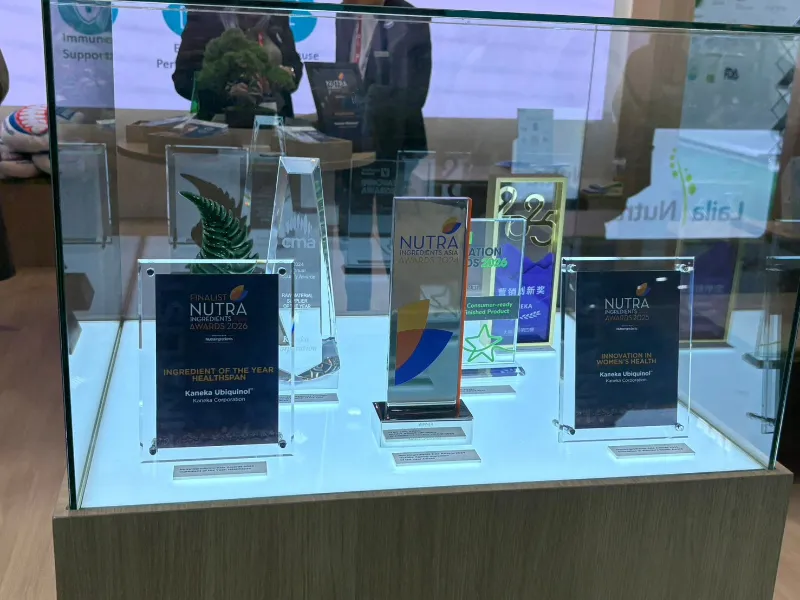
What Does Vitafoods Asia 2026 Reveal About Supplement Quality Standards?
Vitafoods Asia is one of Asia’s leading Nutraceutical industry events, covering areas such as:
Ingredients & Raw Materials
Contract Manufacturing
Quality & Services
Finished Products
Innovation and Scientific Content
The event demonstrates that creating a high-quality supplement does not begin with the final product on the shelf.
Instead, it starts from:
Ingredient Selection → Formula Development → Manufacturing Process → Quality Testing → Consumer Communication
Therefore, in 2026, competition in the supplement market is no longer about:
“Who can add more ingredients?”
but rather:
“Who can build greater consumer trust?”
1. Ingredient Traceability: Knowing Where Ingredients Come From
One of the first things modern consumers care about is:
“Where do the ingredients come from?”
Because even the same type of nutrient can differ depending on:
Ingredient source
Extraction process
Purity
Manufacturing technology
Supplier standards
For example:
Omega-3 is not simply “fish oil.”
Consumers are increasingly interested in questions such as:
What type of fish is used?
Has it gone through purification?
Has it been tested for heavy metals?
What is the oxidation level?
For botanical extracts, consumers may ask:
Which part of the plant is used?
How much active compound does it contain?
What extraction standards are applied?
This concept is known as:
Ingredient Traceability
or the ability to track and verify the origin and quality of ingredients throughout the supply chain.
It has become an important part of quality systems in the food and supplement industries.
2. Manufacturing Quality Standards
A high-quality supplement does not depend only on the ingredients.
The manufacturing process is equally important.
Some key standards recognized by consumers and the industry include:
GMP (Good Manufacturing Practice)
GMP refers to guidelines that control manufacturing processes to ensure:
Proper production facilities
Controlled manufacturing procedures
Prevention of contamination
Quality monitoring systems
The U.S. Food and Drug Administration (FDA) has established Current Good Manufacturing Practice (CGMP) requirements for dietary supplements to help ensure products are consistently produced and meet quality standards.
These standards may not be visible to consumers when looking at a bottle, but they directly influence product reliability and trust.
3. Science-Based Supplements: Research Support Matters
Modern supplements are no longer built only around claims such as:
“Natural”
or
“Special Formula”
Consumers increasingly want scientific evidence.
They want to know:
Is there research supporting the ingredient?
What dosage was studied?
Who participated in the research?
What were the outcomes?
Examples:
Creatine
There is extensive research supporting its role in areas such as performance and muscle function.
Omega-3
EPA and DHA have been studied across multiple health-related areas.
Magnesium
Research has explored its role in muscle function, nervous system activity, and various biological processes.
The important point is:
A quality supplement should communicate benefits honestly and avoid making claims beyond what scientific evidence supports.
4. Accurate Labeling: Does the Product Match the Label?
Another factor becoming increasingly important is:
Does what is written on the label match what is actually inside the product?
For example:
A label may state:
Vitamin C 1,000 mg
or
Omega-3 containing specific EPA/DHA amounts.
Modern consumers are not only interested in ingredient names.
They want to know:
How much active ingredient are they actually receiving?
This is why quality testing systems such as:
Identity Testing
Purity Testing
Potency Testing
Stability Testing
play an important role in the supplement industry.
5. Product Safety Comes First
Supplements are products that consumers take into their bodies.
Therefore, safety is one of the most important considerations.
Important safety evaluations include:
Heavy Metal Testing
Especially for ingredients such as:
Fish oil
Marine extracts
Certain minerals
Contaminant Testing
Including:
Microbial contamination
Residual substances
Manufacturing-related impurities
Stability Testing
To ensure the product maintains quality throughout its shelf life.
These processes may not be visible from the outside of a supplement bottle, but they create the difference between:
“an ordinary supplement”
and
“a supplement built with strong quality standards.”
6. Transparency Builds Consumer Trust
Modern consumers do not only want products.
They want information.
Examples include:
Manufacturing source
Ingredient origin
Quality certifications
Testing results
Usage instructions
Active ingredient amounts
This trend is often described as:
Clean Label + Transparency
Clear communication is becoming increasingly important because trust is no longer built through advertising alone.
It is built through:
Information that consumers can verify.
7. Product Format Is Also Part of Quality
In 2026, consumers are not only looking at nutrients.
They are also considering how products fit into their lifestyles.
Examples include:
Capsules
Softgels
Powders
Chewables
Gummies
Functional Drinks
Because everyone has different routines.
For example:
Athletes may prefer powders
Busy professionals may prefer convenient formats
Some consumers may choose chewable supplements because they are easier to consume
However, a good format must still maintain:
Active ingredient stability
Safety
Appropriate nutrient levels
Convenience alone is not enough.
8. Personalization: The Growth of Personalized Nutrition
Another major trend in the health industry is:
Personalized Nutrition
Consumers increasingly understand that:
“Everyone’s health needs are different.”
For example:
Athletes
May focus on:
Performance
Recovery
Electrolytes
Protein
Working Professionals
May focus on:
Brain Health
Stress Management
Energy
Older Adults
May focus on:
Muscle Preservation
Bone Health
Healthy Aging
Therefore, future supplements may not compete by asking:
“Which formula is the best?”
Instead, the question may become:
“Which formula is best suited for each individual?”
Why Are Supplement Quality Standards the Future of the Industry?
Because the supplement market is shifting from a market driven by advertising claims
to a market driven by trust and credibility.
Consumers no longer want products that simply say:
“This is good.”
They want to know:
Why is it good?
What evidence supports it?
How safe is it?
Is it suitable for them?
This is why events like Vitafoods Asia 2026 focus on:
Ingredients
Innovation
Science
Quality
Manufacturing
Because these are the foundations of the future supplement industry.

Summary
In 2026, consumers choosing supplements are no longer looking only at:
“What ingredients are inside the bottle?”
They are also considering:
✅ Ingredient sources
✅ Manufacturing standards
✅ Scientific evidence
✅ Label accuracy
✅ Product safety
✅ Brand transparency
✅ Lifestyle suitability
Vitafoods Asia 2026 reflects an important shift in the supplement industry.
The future is not about adding more ingredients.
It is about creating products that have:
Quality + Scientific Support + Consumer Trust
Because ultimately, the supplement consumers choose is not simply the one that claims to be the best.
It is the one that makes them feel:
“I can trust this product.”
References
Vitafoods Asia. Event Overview & Key Sectors 2026.
U.S. Food & Drug Administration (FDA). Current Good Manufacturing Practice (CGMP) in Manufacturing, Packaging, Labeling, or Holding Operations for Dietary Supplements.
World Health Organization (WHO). Good Manufacturing Practices for pharmaceutical products: main principles.
National Institutes of Health (NIH), Office of Dietary Supplements. Dietary Supplements: What You Need to Know.
Gahche J, et al. Dietary Supplement Use Was High among US Adults in 2020. National Health Statistics Reports.
Kårlund A, et al. Quality and safety considerations in dietary supplements. Nutrients.
International Food Information Council (IFIC). Consumer Perspectives on Food, Nutrition and Health Trends.
World Health Organization (WHO). Food safety and quality standards.

The Benefits of Calcium Citrate That Many People Still Don’t Know: Why Is This Form of Calcium Different?

Floods and Storms: 5 Vitamins to Keep at Home for Emergency Preparedness

What Happens When You Take Vitamin D3 Together with Magnesium?